Touch in real-world tasks
To tighten screws or hand over an object, robots must adjust their movements in response to contact. CCTV.com reporter Sun Qianwen interviewed Ensuring founder and CEO Hou Ningzhe about the engineering behind robotic touch, from selecting and manufacturing sensors to collecting data and integrating it into models.
Choosing a sensing method that can scale
The report compares piezoresistive, capacitive, piezoelectric and vision-based tactile sensing. The tradeoffs include static force measurement, electromagnetic interference, module size and computing requirements. Hou explains how Ensuring uses dense piezoresistive arrays and signal reconstruction to measure both normal and shear forces.
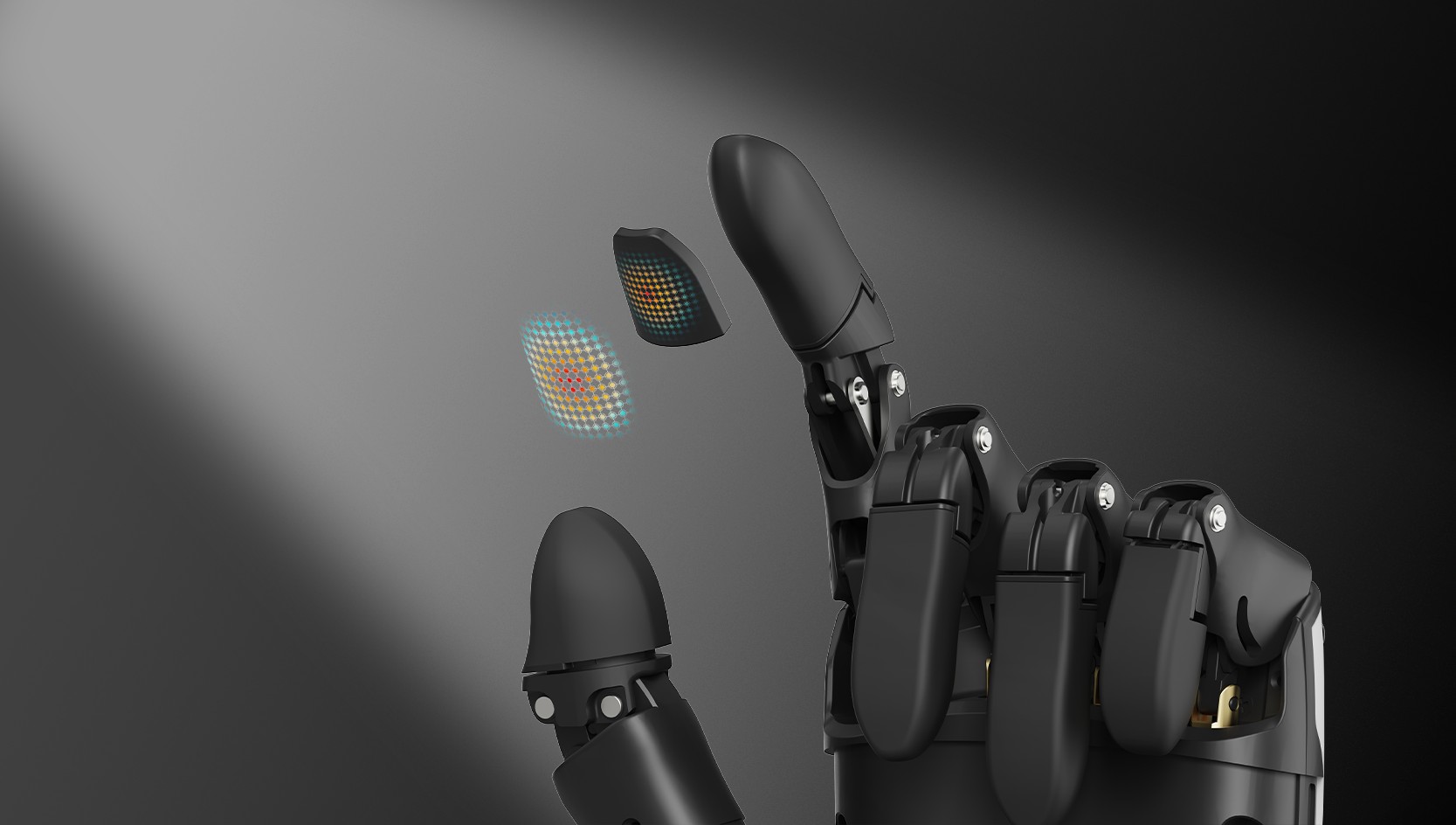
Tacta supports fine contact measurements on robot hands and end effectors, with 361 sensing elements per square centimeter and sampling at up to 1,000 Hz. HexSkin covers larger curved surfaces such as arms and torsos, with up to 1.23 square meters per cluster.
Moving from samples to volume production
Customers require different shapes, mounting positions and force ranges. The report describes an automotive-grade multidimensional piezoresistive sensor line that Ensuring developed with a manufacturing partner in Zhuhai. It began operating in August 2026, uses the IATF 16949 quality management framework and has a planned annual capacity of five million sensors.
CCTV.com reports that the hardware has moved from batch sampling into volume shipments for selected dexterous-hand, humanoid robotics and data collection customers. It also covers Ensuring’s expansion into Europe.
Collecting forces that robot hands can use
Hou identifies three sources of error in tactile demonstrations: mismatched force dimensions between the glove and the robot, sensor movement on different hands, and bulky gloves changing how a person performs a task. The report uses Magic Glove to explain how modular sizing, position compensation and matching force dimensions can address these issues.
Bringing tactile signals into multimodal models
Contact signals can be sparse and fast-changing, and sensors from different vendors produce different output formats. The interview describes UTLS as a common representation for signals from different sensors. It also introduces E-Tac Expert, which organizes tactile information for use alongside vision, language and action inputs. The report closes by asking how those signals can improve performance on real tasks.